Key Takeaways
- Feeling trapped caring for elderly parent is a common response to an impossible structural situation, not a sign of inadequate love or willpower.
- The guilt-resentment cycle many caregivers describe is a recognized pattern, not a personal failing to hide.
- Depression in care recipients is often missed even by attentive staff, which adds unseen weight to a caregiver’s load.
- Caregiver burnout has identifiable stages, and naming the stage you’re in is the first practical step toward relief.
- Support that reaches you directly, without added appointments or paperwork, is what actually changes the trajectory.
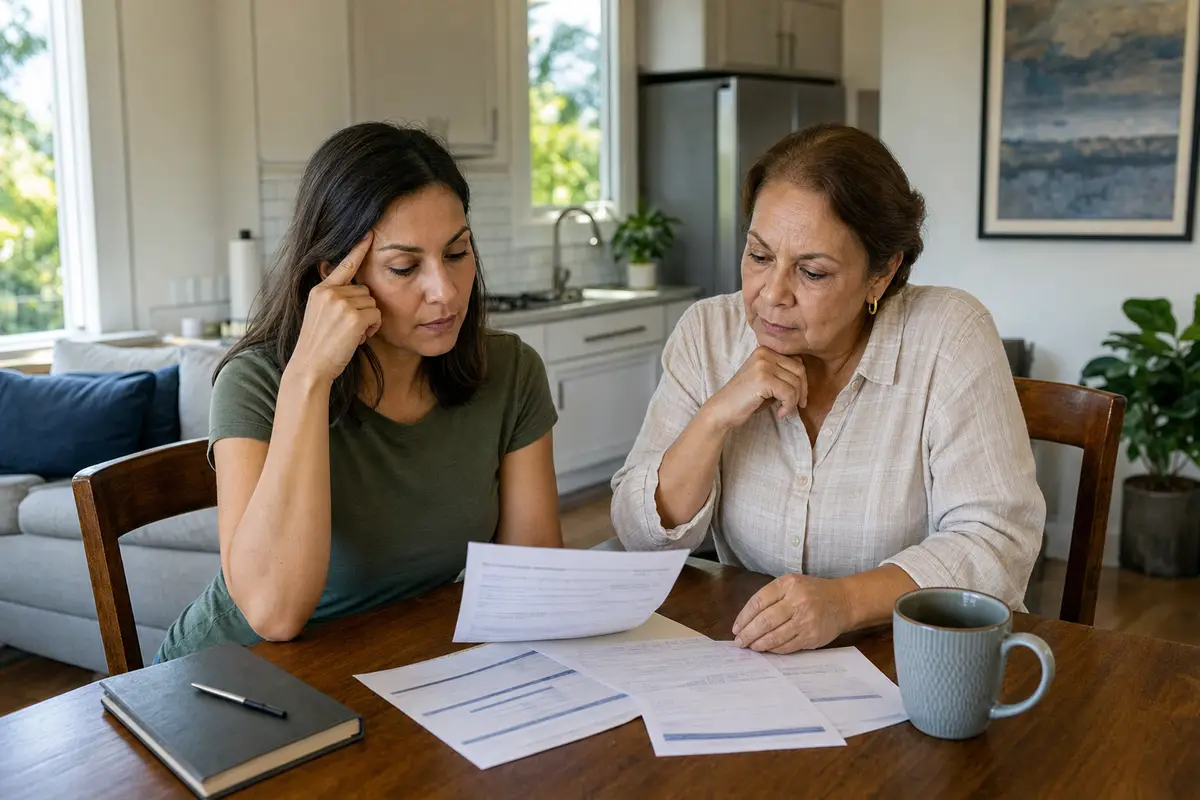
When you lie awake running through tomorrow’s medication schedule, doctor calls, and the argument you’ll probably have about the stove again, feeling trapped caring for elderly parent is the only honest way to describe it. You didn’t choose this feeling. It arrived the same way the caregiving did: gradually, then all at once, until the life you had before became hard to locate. Naming it plainly, without flinching, is the first step toward doing something about it. Most caregivers reach this point quietly, with no single moment they can point to as the start, which is part of why it’s so hard to explain to anyone who hasn’t lived it.
What feeling trapped actually looks like
It rarely looks like one dramatic moment. It looks like canceling plans so often that friends stop asking. It looks like resenting your parent for needing you and then hating yourself for the resentment within the same hour. It looks like answering ‘I’m fine’ on reflex while doing math in your head about how many more years this could go on.
Many caregivers describe a specific cycle: exhaustion builds, resentment surfaces, shame follows close behind, and then guilt pushes them back into overfunctioning to make up for feeling anything other than grateful. This loop isn’t a character defect. It’s what happens to anyone carrying unsustainable, unshared responsibility for an extended period. If you want a closer look at how this pattern forms and repeats, this overview of what caregiver burnout actually is walks through the mechanics.
The trapped feeling also has a time dimension that makes it heavier than ordinary stress. A bad week at a job usually ends. Caregiving for a parent with a chronic or progressive condition often has no visible endpoint, and that open-endedness is part of what makes it feel less like stress and more like a life sentence. Knowing that the structure, not your character, produces this feeling is itself a useful piece of information. It changes the question from ‘what’s wrong with me’ to ‘what needs to change here.’
What the research shows about what gets missed
Part of what makes caregiving feel trapping is that you’re often managing more than you’re told. Depression in the person you’re caring for is frequently invisible, even to people paying close attention.
Clinical Insight
A Maryland assisted living study involving 196 residents across 22 facilities found that screening tools completed by direct-care staff failed to reliably distinguish which residents were depressed; clinical evaluation found cases the screening tools missed entirely (Maryland AL study, Am J Geriatr Psychiatry (2006), 196 residents, 22 facilities; staff-completed CSDD-M-LTCS and one-item screen failed to discriminate depressed cases). A separate pilot study that trained direct-care staff for four weeks found that staff knowledge about depression improved, but their actual recognition of residents with depressive symptoms did not (ALF depression training pilot study (2016), 15 direct-care staff, 32 residents). In a four-state study, depressed residents were discharged to nursing homes at 1.5 times the rate of non-depressed residents, meaning untreated depression shortens how long a person remains in the home or residence they prefer (Four-state assisted living study, Am J Geriatr Psychiatry (2003)).
If trained staff with professional tools struggle to catch depression in the person they’re caring for, it’s reasonable that you, without those tools and without a shift that ends, would miss signs too, or feel like you’re failing to catch them. That isn’t a personal shortfall. It’s a known limitation of informal and even formal observation. Some physical changes also mimic or mask mood and cognitive symptoms; if your parent’s confusion or agitation has appeared suddenly, it’s worth reading about mental symptoms linked to UTIs in older adults, a frequently overlooked cause. Ruling out a physical cause first cuts weeks of guessing and removes some of the guilt caregivers feel when they assume a mood change is personal rather than medical.
What actually helps
The trapped feeling loosens when two things happen: your own exhaustion gets named and addressed directly, and the caregiving load gets distributed instead of carried entirely alone.
Naming where you are matters more than it sounds. Burnout moves through identifiable stages, from early fatigue through resentment to eventual depletion, and the stages of caregiver burnout look different enough that what works at stage one won’t touch stage three. If you’re not sure which stage describes you, this guide to recognizing a common sign of caregiver burnout is a reasonable place to start.
Sudden, unexplained fatigue deserves its own attention too, both in your parent and in yourself. If exhaustion has appeared quickly rather than built slowly, see what causes sudden extreme fatigue in older adults to rule out a medical cause before assuming it’s only caregiving load.
Distributing the load is the harder part, because many caregivers have no one to hand tasks to. If that’s your situation, a caregiver support group puts you in a room, physical or virtual, with people who understand the specific math of feeling trapped without needing it explained. And if you’re supporting a caregiver rather than being one, how to support a caregiver covers what actually reduces someone’s load versus what just sounds supportive.
If your parent is showing signs that their needs have outgrown what you can manage safely at home, it helps to know what those signs look like before a crisis forces the question. This list of signs your elderly parent needs more help is a practical starting point, as is this broader guide to caring for an elderly parent. Reading these before a crisis gives you a reference point instead of a panic decision, and that alone reduces some of the trapped feeling because the next step stops being a mystery.
Does caregiver burnout get better on its own?
No. Caregiver burnout deepens without a change in either the caregiving structure or the caregiver’s own support, because the conditions that caused it (unshared load, no recovery time, chronic uncertainty) do not resolve by waiting. Recovery timelines vary by person and situation, but they require active steps, not passive endurance; see how long it takes to recover from caregiver burnout for a realistic picture.
If you’re looking for concrete next moves rather than another description of the problem, this practical guide on how to recover from caregiver burnout and this one on how to deal with caregiver burnout both lay out specific actions rather than general encouragement. Caregiver stress is sometimes referred to by other clinical terms as well, and understanding what caregiver stress is also known as can describe what you’re experiencing accurately to a doctor or therapist. Acting early, before depletion sets in, is consistently easier than trying to rebuild from empty.
The access angle: getting support without adding another task
Here’s the part that keeps most caregivers from getting help: therapy usually requires finding a provider, waiting weeks for an opening, arranging transportation, and adding one more appointment to a calendar that’s already full. For someone feeling trapped caring for elderly parent, that barrier alone is often enough to make them give up before starting.
Therapy built specifically for caregivers removes the logistics, not just the stigma. Video sessions mean you don’t drive anywhere or find childcare or coverage for your parent during a commute. No waitlist means the support starts this week, not next quarter. And if sundowning, confusion, or nighttime agitation are part of what’s wearing you down, understanding what sundowning is and why it happens also reduces some of the unpredictability driving your exhaustion.
You can browse more caregiver-specific guidance in the caregiver resource section of this site.
Getting support this week
Better You Therapy is a Florida-licensed mental health practice providing teletherapy statewide and on-site clinical services in Southeast Florida senior-living communities. For caregivers, that means a licensed clinician meets with you by video, wherever you are, without a referral chain or a months-long wait. Medicare and private insurance are accepted, and the practice handles billing and documentation directly, so the only thing you need to do is show up to the session.
If you recognize yourself in any part of this article, that recognition is worth acting on. Support exists that doesn’t ask you to solve another logistical puzzle to access it.