Key Takeaways
- Postpartum anxiety involves persistent worry, racing thoughts, and physical tension that interfere with daily life after childbirth.
- It is distinct from the common worry most new parents feel; the intensity and duration set it apart.
- Postpartum anxiety can occur with or without postpartum depression, and it often goes unrecognized because it does not always look like sadness.
- Evidence-based therapy, particularly cognitive behavioral approaches, is effective treatment for postpartum anxiety.
- Support is available through teletherapy and in-person care, and reaching out is a reasonable first step, not a last resort.
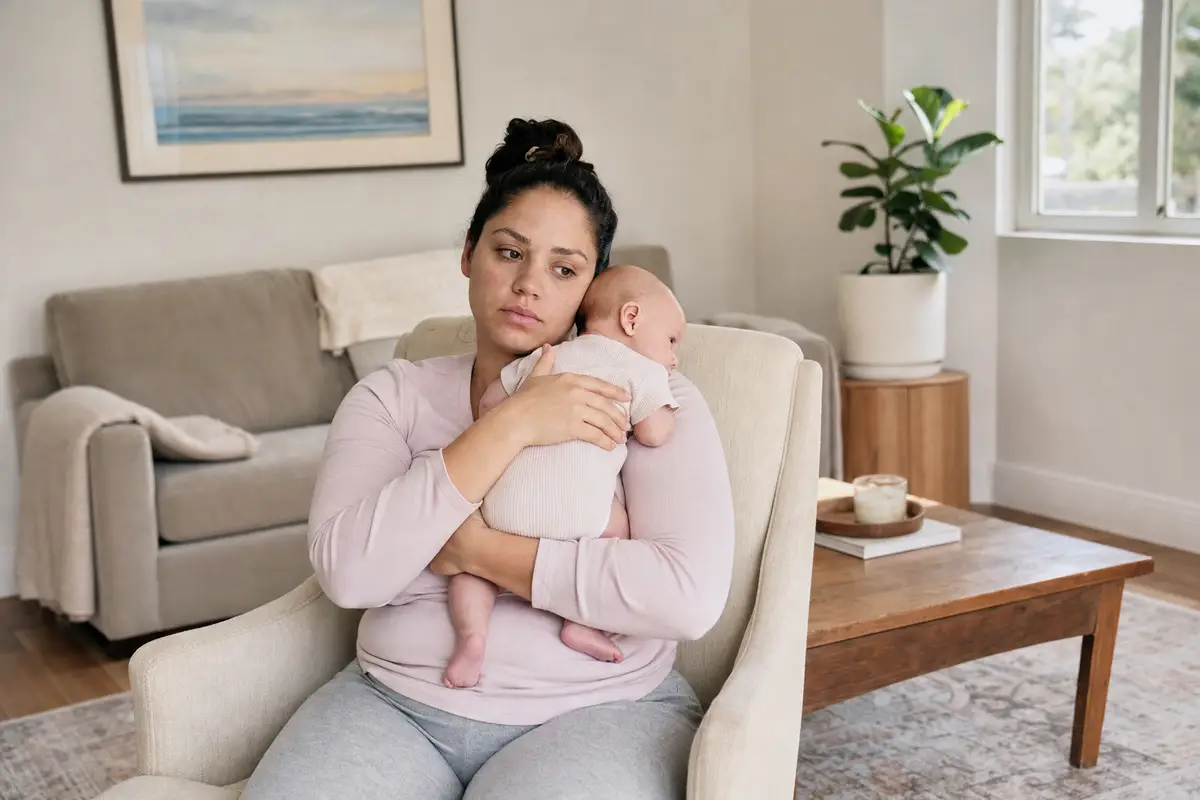
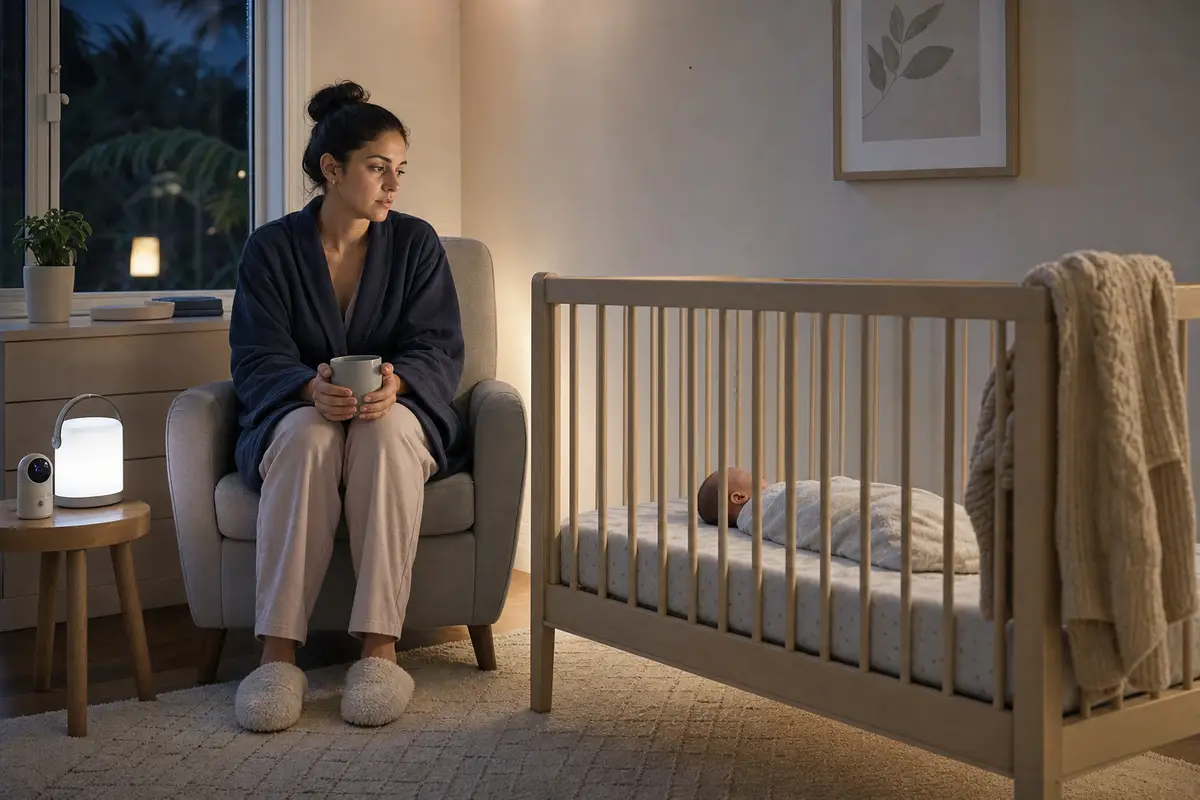
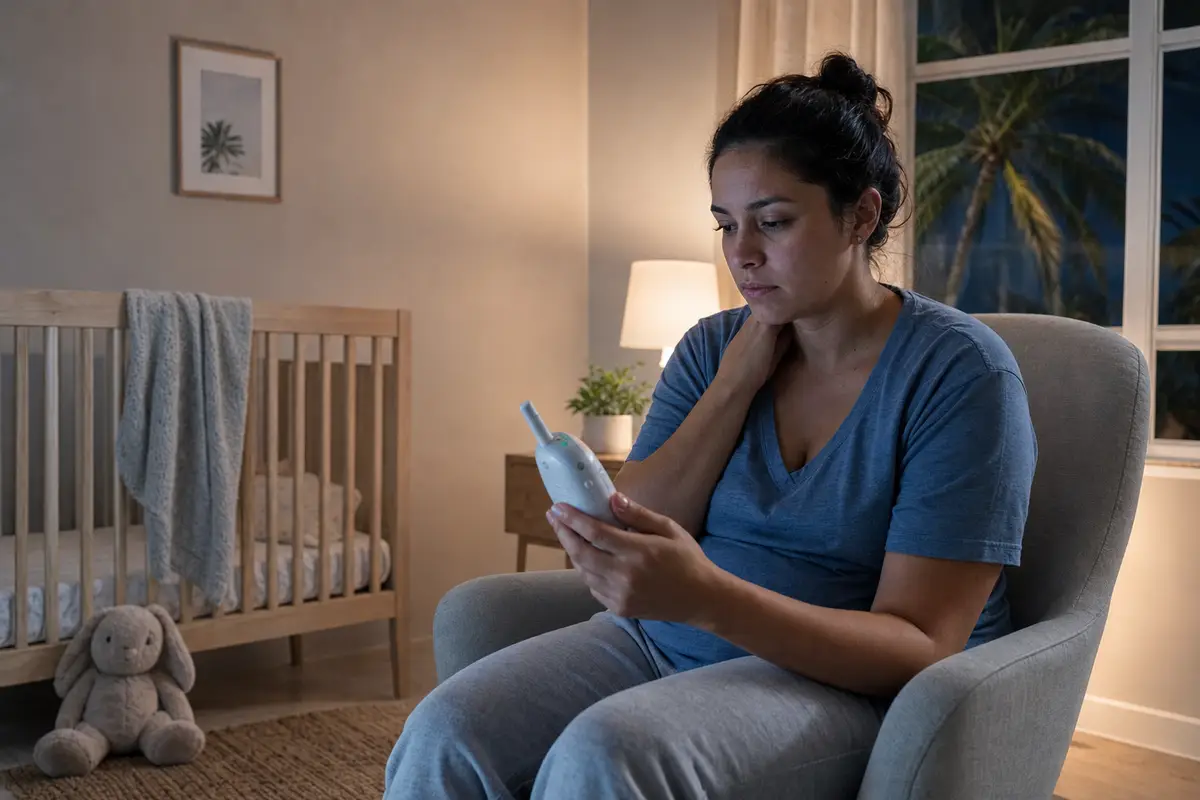
Your heart races at 3 a.m. while the baby sleeps soundly. You check the monitor again. Then again. You run through every possible danger, the crib slats, the formula ratio, the car seat buckle, until your chest feels tight and your thoughts will not slow down. If this sounds familiar, you are asking what is postpartum anxiety, and whether what you are feeling has a name. It does, and you are not failing at motherhood by experiencing it.
Many new mothers expect the baby blues or postpartum depression. Fewer expect this: a mind that will not stop scanning for threats, a body that stays braced even when nothing is wrong. That mismatch between what people expect and what they actually feel is part of why postpartum anxiety stays hidden so often. It shows up in the body as much as in the mind, and it coexists with a mother who, on the surface, looks like she is managing fine.
What is postpartum anxiety, exactly?
Postpartum anxiety is a mental health condition marked by excessive, persistent worry and physical tension that develops during pregnancy or in the year after childbirth. It goes beyond the normal watchfulness that comes with caring for a newborn. The worry is constant, hard to control, and often focused on the baby’s safety, health, or wellbeing.
Unlike a passing wave of nervousness, postpartum anxiety does not ease once you check on the baby or get reassurance. It returns minutes later, sometimes stronger. Many mothers describe it as a motor that will not turn off, even when they are exhausted and know, logically, that everything is fine. The reassurance works for a moment, then the thought loop starts again.
Postpartum anxiety is separate from postpartum depression, though the two frequently occur together. A mother has postpartum anxiety without necessarily feeling sad or hopeless at all. She is energized by worry, hypervigilant, and unable to rest even when the baby is sleeping. That distinction matters because screening conversations often focus on sadness first, which means anxiety-driven symptoms get missed in routine checkups.
The distinction has practical weight. A mother screened only for depression, using a questionnaire built around sadness and low mood, can score low and still be living with untreated anxiety every hour of the day. Clinicians who ask specifically about worry, checking behaviors, and physical tension catch cases that depression-focused screening tools miss entirely.
Common signs of postpartum anxiety
The signs are both mental and physical, and they often show up together.
- Racing or intrusive thoughts about something terrible happening to the baby
- Constant checking: breathing, temperature, locked doors, car seat straps
- Difficulty sleeping even when the baby is asleep
- Muscle tension, a racing heart, nausea, or dizziness
- Irritability or a sense of dread that will not lift
- Avoiding situations (driving, leaving the house, letting others hold the baby) out of fear something will go wrong
Some mothers also experience panic attacks: sudden surges of fear accompanied by chest tightness, shortness of breath, or a feeling of losing control. These happen with no clear trigger, which makes them especially frightening the first time. A panic attack in the middle of an ordinary afternoon, folding laundry or nursing, feels like a medical emergency even when it passes within minutes.
It is worth distinguishing ordinary new-parent worry from postpartum anxiety. Nearly every new mother double-checks the crib or worries about SIDS. Postpartum anxiety differs in degree and duration: the worry consumes hours of the day, disrupts sleep and eating, and does not respond to reassurance. If the pattern lasts beyond the first few weeks and interferes with functioning, it points toward a clinical condition rather than typical new-parent nerves.
The physical symptoms deserve attention on their own terms. A racing heart, nausea, and dizziness are real bodily events, not exaggerations or signs of weakness. Mothers sometimes visit urgent care believing something is medically wrong before anyone names the pattern as anxiety. Naming it accurately is often the first relief a mother experiences in weeks.
Why postpartum anxiety happens
Hormonal shifts after childbirth are dramatic. Estrogen and progesterone drop sharply within days of delivery, and this shift affects the brain chemistry involved in mood and stress regulation. Sleep deprivation compounds the effect, since the body’s ability to regulate anxiety depends heavily on consistent rest.
Psychological and situational factors matter too. A first-time mother facing a steep learning curve, a mother with a history of anxiety before pregnancy, or a mother managing a high-needs baby or a difficult birth experience all face elevated risk. Financial stress, lack of practical support, and the isolation that often comes with early parenthood add further pressure.
Consider a mother three weeks postpartum who has not slept more than two consecutive hours since delivery. Her body is primed for threat detection by sheer exhaustion alone, on top of the hormonal recalibration already underway. It is not a personal weakness that produces the racing thoughts. It is a nervous system under genuine physiological strain, responding exactly as a sleep-deprived, hormonally shifted body is built to respond.
Anger and irritability sometimes travel alongside anxiety in the postpartum period. If snapping at a partner or feeling flashes of rage has become part of the picture, postpartum rage often shares the same underlying stress response as postpartum anxiety, and the two frequently need to be addressed together. Treating one in isolation, without naming the other, often leaves a mother still feeling like something is wrong even after the primary symptom improves.
The interaction between these factors compounds rather than simply adds. A mother with a prior anxiety history who also faces sleep deprivation and financial pressure is not facing three separate, mild problems. She is facing one amplified problem, where each factor makes the others harder to manage. Treatment that addresses only one piece, sleep coaching without therapy, or therapy without addressing practical support, tends to produce slower, shakier progress.
How postpartum anxiety is treated
Evidence-based therapy is the front-line treatment for postpartum anxiety. Cognitive behavioral therapy (CBT) helps mothers identify the specific thought patterns driving the worry cycle and replace catastrophic predictions with more accurate, manageable ones. It also teaches concrete tools for interrupting a panic response before it escalates.
Therapy for postpartum anxiety typically involves:
- Identifying specific triggers and thought patterns, rather than treating the anxiety as a vague, unmanageable cloud.
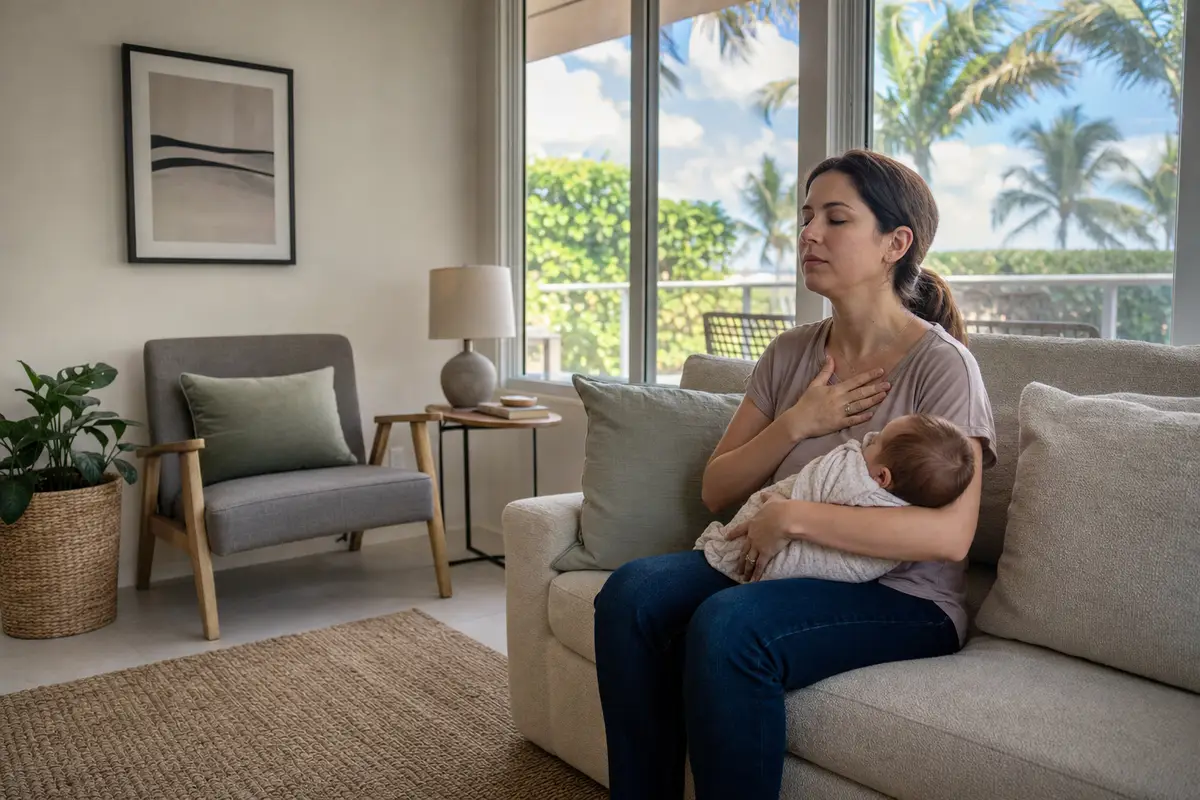
- Building practical coping skills for moments of acute panic, such as grounding techniques and breathing regulation.
- Addressing sleep, since sleep deprivation and anxiety reinforce each other in a loop that is hard to break without outside support.
- Involving a partner or support person when useful, since postpartum anxiety affects the whole household, not just the mother.
For some mothers, a combination of therapy and medication managed by a physician offers the most relief, particularly when anxiety is severe or accompanied by depression. That decision belongs to the mother and her treating clinician, based on her specific history and symptoms.
Treatment timelines vary by person. Some mothers notice meaningful improvement within a few weeks of starting therapy, while others need several months of consistent work. When postpartum anxiety goes away depends on factors like how early treatment starts, the severity of symptoms, and the support available at home. Starting sooner rather than later changes that timeline more than any other single factor.
The structure of therapy itself matters as much as the timeline. A mother working through CBT learns to name a catastrophic thought the moment it appears, test it against evidence, and replace it with a more accurate prediction, all within the space of a single session’s practice. That skill transfers directly into 3 a.m. moments at the crib, which is exactly where the worry does its worst damage.
When to seek help
Reach out for professional support if the worry has lasted more than two weeks, if it interferes with sleep, eating, or your ability to care for yourself or the baby, or if panic attacks have started. You do not need to wait until symptoms feel unbearable.
Early treatment shortens the overall course and keeps the anxiety from becoming more entrenched. A mother who starts therapy at three weeks postpartum, while still adjusting to the basic rhythms of a newborn, has an easier path than a mother who waits six months while symptoms compound with exhaustion and isolation. Waiting does not make the decision easier; it only adds more weeks of living inside the worry.
If you or someone you know is in immediate danger, call or text 988 (Suicide & Crisis Lifeline).
For related reading, see How to Help Postpartum Anxiety: What Actually Works.
For related reading, see When Does Postpartum Anxiety Start.
For related reading, see How to Deal With Postpartum Anxiety.
Frequently asked questions
Is postpartum anxiety the same as postpartum depression?
No. Postpartum depression centers on sadness, hopelessness, and loss of interest, while postpartum anxiety centers on excessive worry, racing thoughts, and physical tension. The two conditions overlap in many mothers but occur independently.
Can postpartum anxiety start during pregnancy?
Yes. Anxiety related to pregnancy and the postpartum period begins before delivery in some mothers and is sometimes called perinatal anxiety. The hormonal and psychological factors that drive postpartum anxiety are often already present during pregnancy.
Does postpartum anxiety mean something is wrong with me as a mother?
No. Postpartum anxiety reflects hormonal shifts, sleep deprivation, and the genuine demands of caring for a newborn. It says nothing about parenting ability or love for the baby.
Getting support for postpartum anxiety
If the racing thoughts and physical tension described here sound like your daily experience, that recognition is itself useful information. Postpartum anxiety responds well to treatment, and getting started does not require solving transportation, scheduling, or insurance puzzles on your own.
Better You Therapy is a Florida-licensed mental health practice providing teletherapy statewide and on-site clinical services in Southeast Florida senior-living communities. For new mothers, that means a licensed clinician is reachable by video from home, without the added stress of arranging childcare or travel. Explore postpartum support options to see what fits your situation, or reach out through our home page to take the next step.