Key Takeaways
- When does postpartum anxiety start varies widely: some mothers notice symptoms within days of birth, others not until several months in.
- Anxiety that begins later, around month three to six, often gets missed because attention has shifted away from the newborn period.
- Hormonal shifts, sleep loss, and the weight of new responsibility all play a role in when symptoms surface.
- Postpartum anxiety is not limited to the first weeks after delivery; it appears anytime in the first year.
- Naming the timeline matters because mothers who expect anxiety only in week one often dismiss symptoms that show up later.
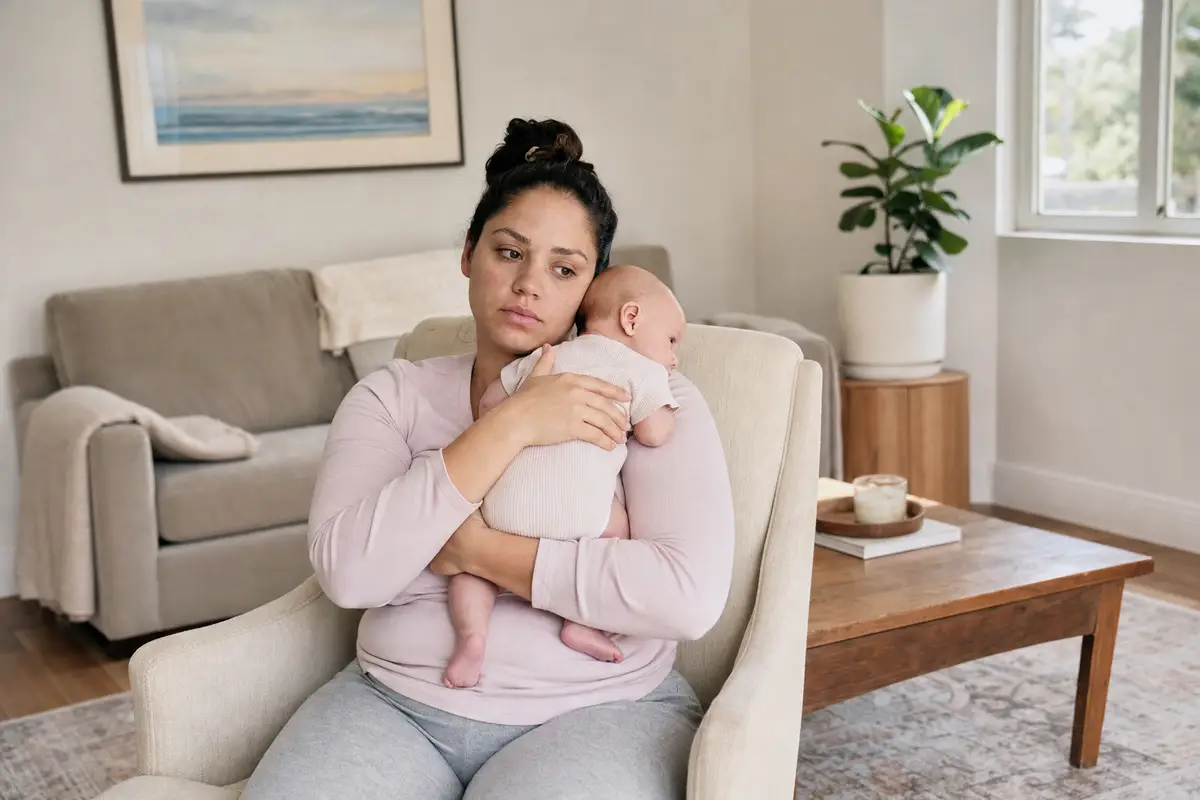
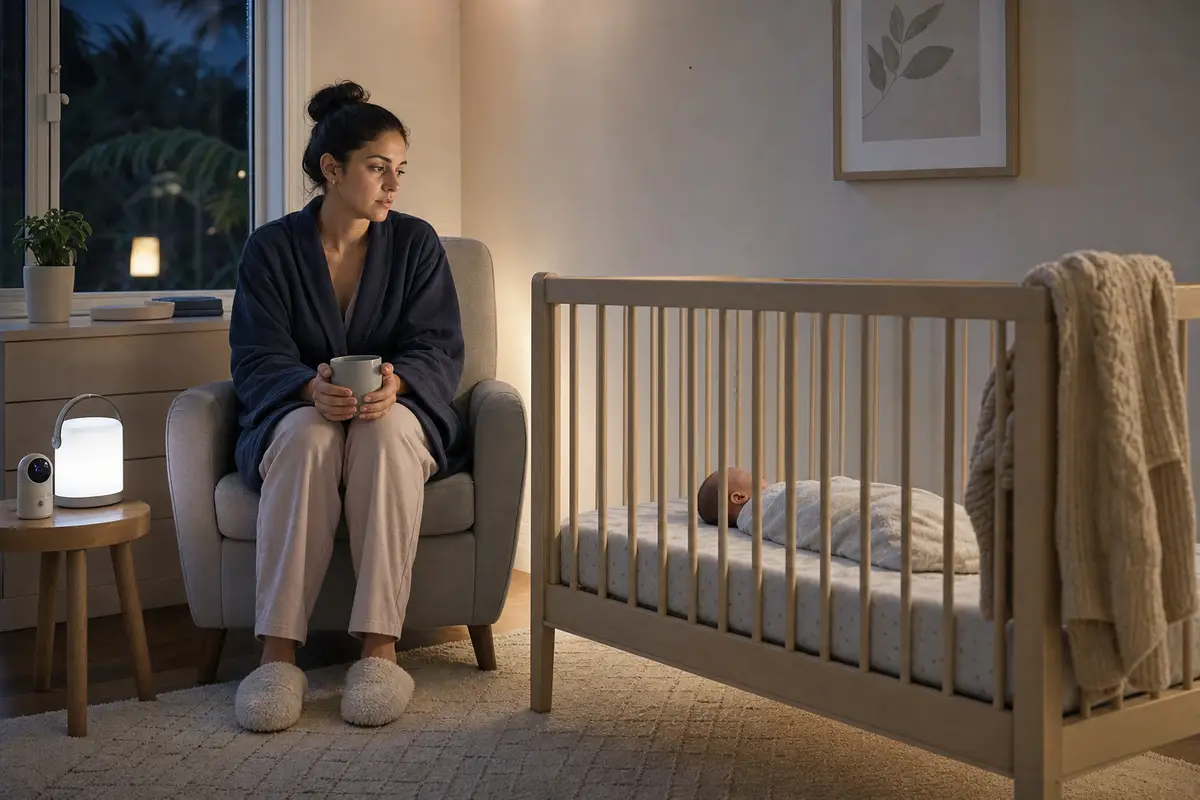
Your baby is four months old, sleeping a little better, and everyone around you has stopped asking how you’re doing. That’s exactly when the racing thoughts start. You lie awake running through worst-case scenarios long after your baby has settled. If this sounds familiar, you’re asking when does postpartum anxiety start, because you assumed anxiety was something that happened right after delivery, not months later. The honest answer is that it starts on its own timeline, and that timeline rarely matches what new mothers are told to expect. Understanding that range changes how you interpret what you’re feeling right now.
When does postpartum anxiety start after birth?
Postpartum anxiety begins anytime in the first year after delivery, and for many mothers it does not start in the first days or weeks. Some notice symptoms almost immediately, within 48 to 72 hours of birth, as hormone levels drop sharply. Others don’t experience noticeable anxiety until two, four, or even six months postpartum, often once the initial flood of support and attention has faded.
There is no single trigger point. Anxiety emerges as a direct hormonal reaction right after delivery, or it builds gradually as sleep deprivation accumulates, as a mother returns to work, or as she realizes she is now solely responsible for keeping a small, fragile person alive. Each of these is a plausible starting point, and none of them is more “normal” than the others. A mother whose anxiety surfaces in month five is not experiencing something unusual; she is experiencing a different, equally common version of the same condition.
This variability is part of why postpartum anxiety is under-recognized compared to postpartum depression. Depression has a more familiar cultural script: sadness, withdrawal, crying, usually discussed as something that appears in the early weeks. Anxiety doesn’t follow that script. It shows up as intrusive thoughts about the baby’s safety, a racing heart at bedtime, or an inability to let anyone else hold the baby, and it starts at week one or month nine, depending on the mother. For a fuller picture of what this looks like day to day, this overview of postpartum anxiety lays out the core symptoms.
Why the timing is so inconsistent
The timing of postpartum anxiety depends on several overlapping factors, not one single cause. Hormonal change is the most immediate: estrogen and progesterone drop steeply within days of delivery, which affects mood regulation for some mothers right away. Hormones alone do not explain the full range of onset, though; they are one input among several.
Sleep deprivation accumulates over weeks, not days. A mother who feels steady in week two feels entirely different by week eight, once chronic sleep loss has worn down her capacity to manage normal worry. Return to work, often around three months in the United States, introduces a new set of stressors: childcare logistics, pumping schedules, guilt, and the loss of constant visual reassurance that the baby is fine. Any of these becomes the moment anxiety crosses from manageable worry into something that interferes with daily functioning.
Consider a mother named in no particular case, just a composite for illustration: she feels fine for the first ten weeks, relies heavily on a partner’s paternity leave, and then the partner returns to work in week eleven. Within days, she’s checking the baby monitor every twenty minutes and can’t fall asleep even when the baby is asleep. Her anxiety didn’t start at birth. It started when her support structure changed. This kind of delayed onset is common, and it’s one reason mothers often don’t connect their symptoms back to the postpartum period at all. The shift in support, not the birth itself, was the trigger point, and that distinction matters for how she understands what’s happening to her now.
What postpartum anxiety looks like once it starts
Once postpartum anxiety starts, it shows up as a cluster of physical and mental symptoms rather than one clear sign. Common patterns include constant worry about the baby’s health or safety, intrusive images of something bad happening, muscle tension, a racing heart, difficulty sitting still, and trouble sleeping even when the opportunity is there.
Some mothers describe a persistent sense of dread they can’t attach to anything specific. Others describe hypervigilance: checking locks, checking the baby’s breathing, rereading the same safety guideline five times. These symptoms coexist with irritability or a short fuse for some mothers, a related but distinct pattern. This piece on postpartum rage covers how irritability and anger fit into the same picture.
It’s worth stating plainly: none of this means something is wrong with you as a mother. These are physiological and situational responses to an enormous life change, not a character flaw or a sign of weakness. The symptoms are real, they are common, and they are treatable regardless of when in the first year they appear.
How long postpartum anxiety lasts once it begins
How long postpartum anxiety lasts depends heavily on when it starts and whether it receives treatment. Anxiety that begins in the first weeks and goes unaddressed continues well past the traditional “fourth trimester” and into the second year for some mothers. Anxiety that starts later, closer to the return-to-work period, often follows a shorter arc once the triggering stressor stabilizes, but it also becomes chronic if left unmanaged.
Treatment changes this trajectory substantially. Mothers who receive evidence-based therapy, typically cognitive behavioral therapy or exposure-based approaches for intrusive thoughts, see symptom reduction within a matter of weeks rather than months. For a detailed breakdown of duration and what influences it, see this guide to how long postpartum anxiety lasts.
When symptoms should prompt a conversation with a professional
Any level of anxiety that disrupts sleep, eating, bonding with the baby, or daily functioning is worth discussing with a healthcare provider, regardless of how many weeks or months postpartum you are. There is no minimum duration required before seeking help, and there is no point in the first year that is “too late” to bring it up.
A simple guideline: if worry feels constant, if it’s accompanied by physical symptoms like a racing heart or shortness of breath, or if intrusive thoughts about harm are present, that’s a signal to talk to an OB-GYN, pediatrician, or mental health provider. These professionals distinguish between situational stress and an anxiety disorder that benefits from structured treatment. Writing down when your symptoms started and what triggered them gives the provider a clearer picture in that first conversation.
If you or someone you know is in immediate danger, call or text 988 (Suicide & Crisis Lifeline).
What helps once postpartum anxiety has started
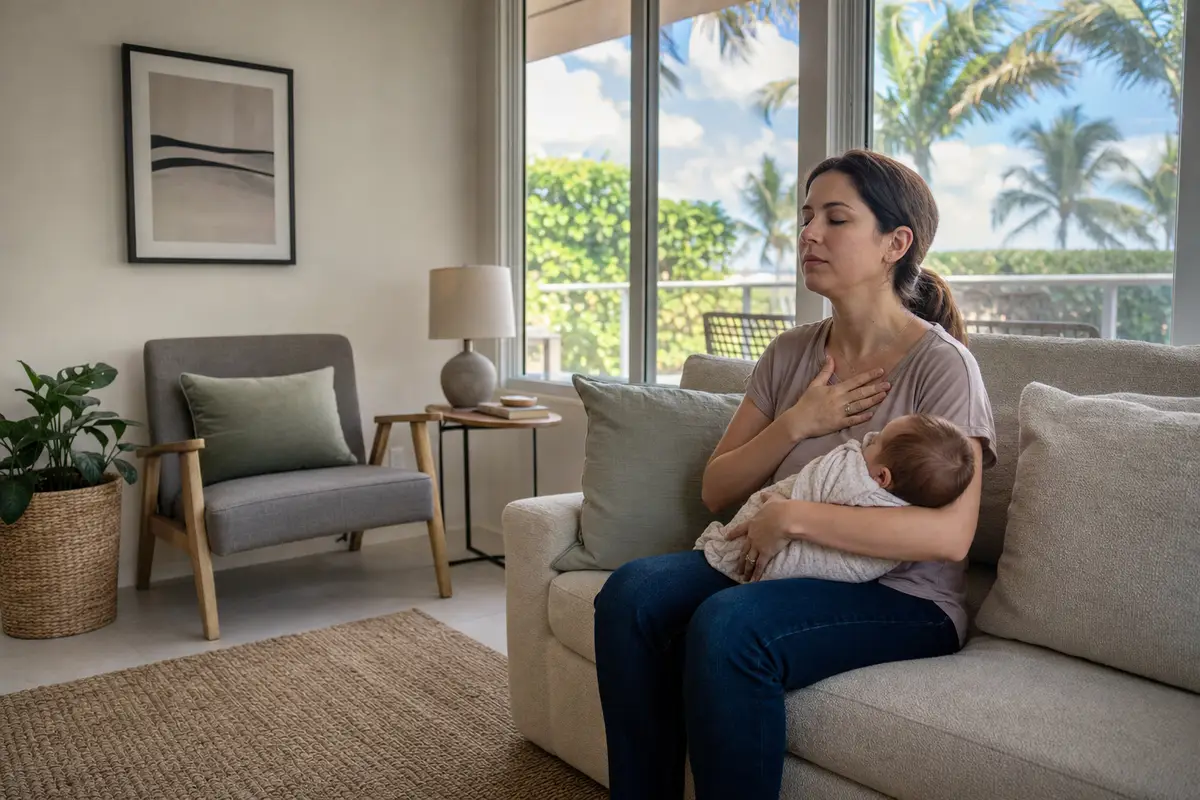
Treatment for postpartum anxiety typically combines therapy, practical support, and sometimes medication, depending on severity. Cognitive behavioral therapy helps mothers identify and interrupt anxious thought patterns. Structured breathing and grounding techniques address the physical symptoms in the moment. Practical changes, like arranging predictable childcare coverage or building in protected sleep windows, address some of the external triggers that keep anxiety activated.
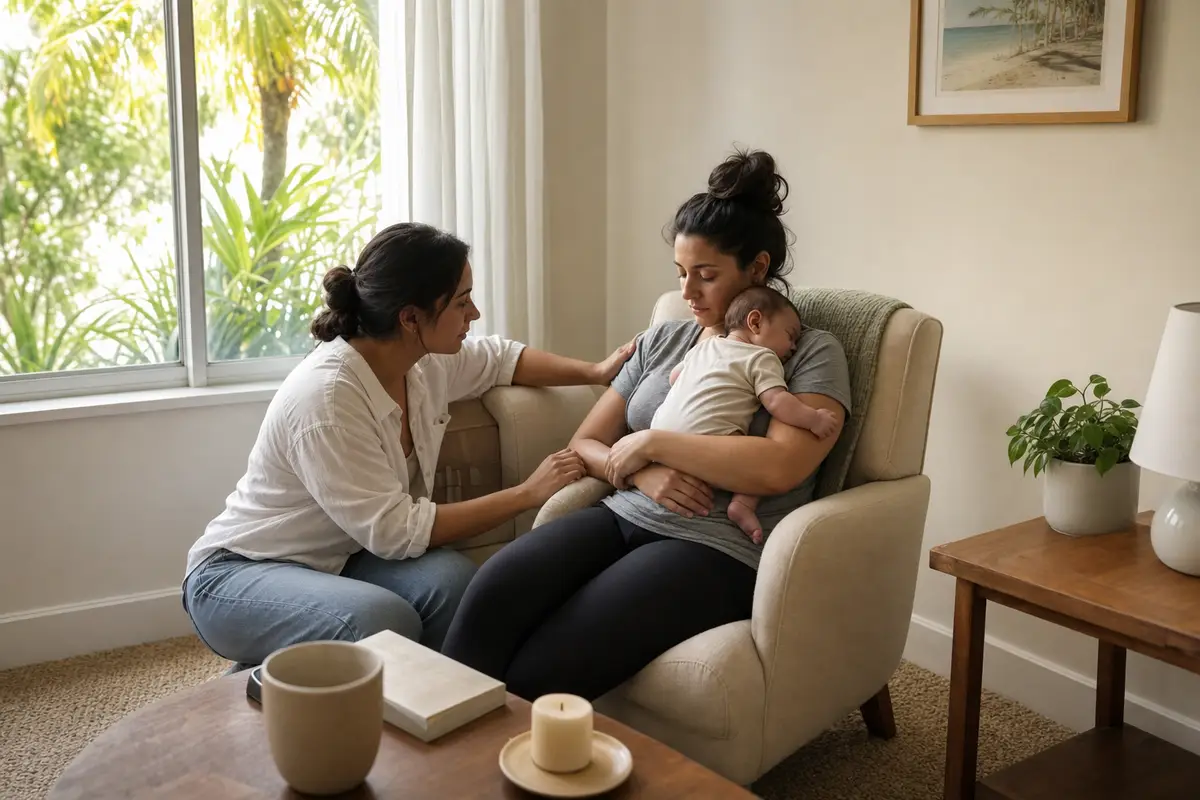
Support doesn’t need to wait until symptoms are severe. This resource on what actually helps walks through specific, concrete steps mothers and their partners take as soon as symptoms appear, whether that’s at two weeks or eight months postpartum.
For mothers wondering about the other end of the timeline, this article on when postpartum anxiety goes away addresses recovery expectations directly.
For related reading, see our postpartum hub.
Common questions about when postpartum anxiety starts
Can postpartum anxiety start months after giving birth?
Yes. Postpartum anxiety starts at any point in the first year after birth, not just in the first days or weeks. Delayed onset is common, particularly around transitions like returning to work, weaning, or a partner’s parental leave ending.
Is it still postpartum anxiety if it starts six months after delivery?
Yes. Clinicians generally use the postpartum period to describe the first year after birth, so anxiety that starts at six months still falls under that umbrella. The label matters less than getting an accurate assessment and appropriate treatment.
Does postpartum anxiety always start suddenly?
No. Some mothers experience a sudden onset tied to hormonal shifts right after delivery, while others notice a gradual build as sleep deprivation, stress, or major life changes accumulate over weeks or months.
How is postpartum anxiety different from normal new-parent worry?
Normal new-parent worry is proportionate and temporary; it eases as you gain experience and confidence. Postpartum anxiety is persistent, often disproportionate to the actual risk, and interferes with sleep, eating, or daily functioning. If worry feels constant or physically distressing, it’s worth a conversation with a provider.
No matter when symptoms started for you, whether in the first week or the ninth month, a conversation with a licensed clinician is the next step. Better You Therapy is a Florida-licensed mental health practice providing teletherapy statewide and on-site clinical services in Southeast Florida senior-living communities. Call or request an appointment through the Better You Therapy website to be matched with a clinician who treats postpartum anxiety, and schedule your first session this week rather than waiting for symptoms to pass on their own.